
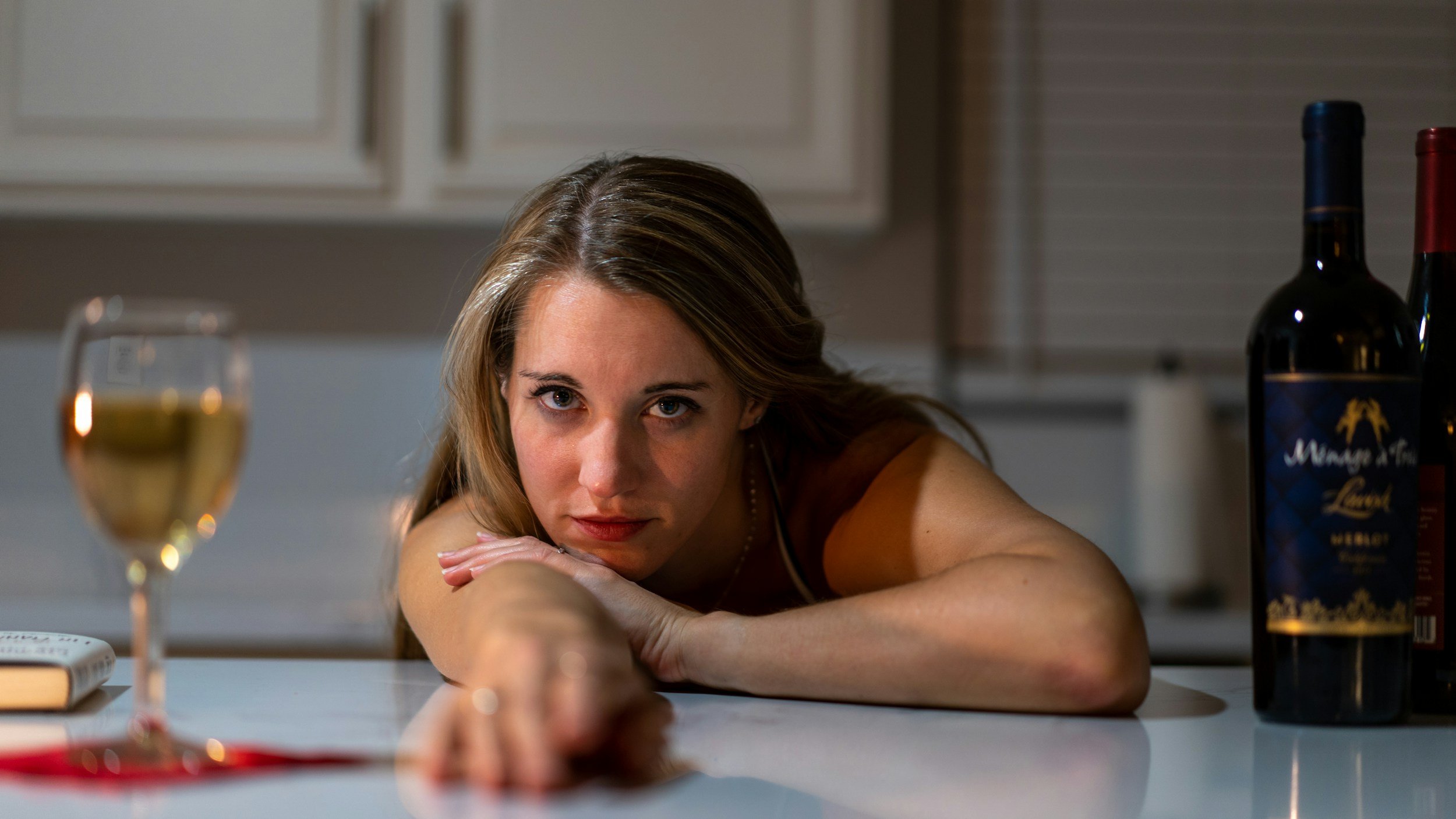
"I used to be able to have a glass of wine with dinner and feel fine. Now one glass means a night of sweating and staring at the ceiling at 3 a.m." We hear this from patients almost every week.
You're not imagining it. In perimenopause and menopause, the same drink lands in a different body. Your hormones, body composition, sleep and metabolism are all shifting, and alcohol interacts with every one of them.
With holiday parties ahead and Dry January around the corner, it's a good time to look at what the evidence says about alcohol in midlife: how it affects your symptoms, your long-term health, and why the new federal guidelines leave many women without a clear answer.
Why the same drink hits harder now
Women reach higher blood alcohol levels than men from the same drink. One reason: women have less gastric alcohol dehydrogenase, the stomach enzyme that breaks down some alcohol before it reaches the bloodstream.
Midlife adds more layers:
Less muscle, more fat. As estrogen declines, women lose lean muscle and gain fat, especially around the abdomen. Muscle holds water; fat doesn't. Less body water means alcohol is more concentrated in your blood.
A busier liver. Your liver is also processing medications, supplements and, for some women, hormone therapy.
A more fragile sleep system. Falling progesterone and estrogen already make sleep lighter and more broken. Alcohol pushes a vulnerable system further.
Medication changes. GLP-1 medications, antidepressants and sleep aids can all change how alcohol feels or interacts in your body. Ask your doctor about yours.
How alcohol affects menopause symptoms
Hot flashes and night sweats
Alcohol widens blood vessels and can raise body temperature, so for many women it acts as a hot flash trigger, especially in the evening. The research here is honestly mixed, and not every woman reacts the same way. That's why we recommend testing it in your own body (see the 14-day experiment below).
Sleep: the 3 a.m. wake-up
Alcohol may help you fall asleep, but it costs you the second half of the night. A 2025 meta-analysis of 27 controlled sleep-lab studies found alcohol delayed the start of REM sleep and shortened it. The effect appeared at a low dose, about two standard drinks, and got worse as the dose went up.
REM is the stage linked to memory, emotional processing and feeling rested. As your body clears the alcohol overnight, the sedation wears off and you wake up, often right when night sweats are most likely too.
Mood and "drinking to cope"
A 2025 study of 936 women aged 40–65 found perimenopausal women had the highest symptom scores, the lowest wellbeing and the strongest tendency to drink to cope. Drinking to cope partly explained the link between worse symptoms and hazardous drinking.
The trap is real: alcohol eases anxiety for an hour, then worsens sleep, mood and hot flashes, which makes the next drink feel more necessary.
The long-term picture
Breast cancer
Breast cancer is the most common alcohol-related cancer in women. The U.S. Surgeon General's 2025 advisory estimates that 16.4% of U.S. breast cancer cases in 2019, about 44,000, were linked to alcohol.
The risk climbs with each daily drink:
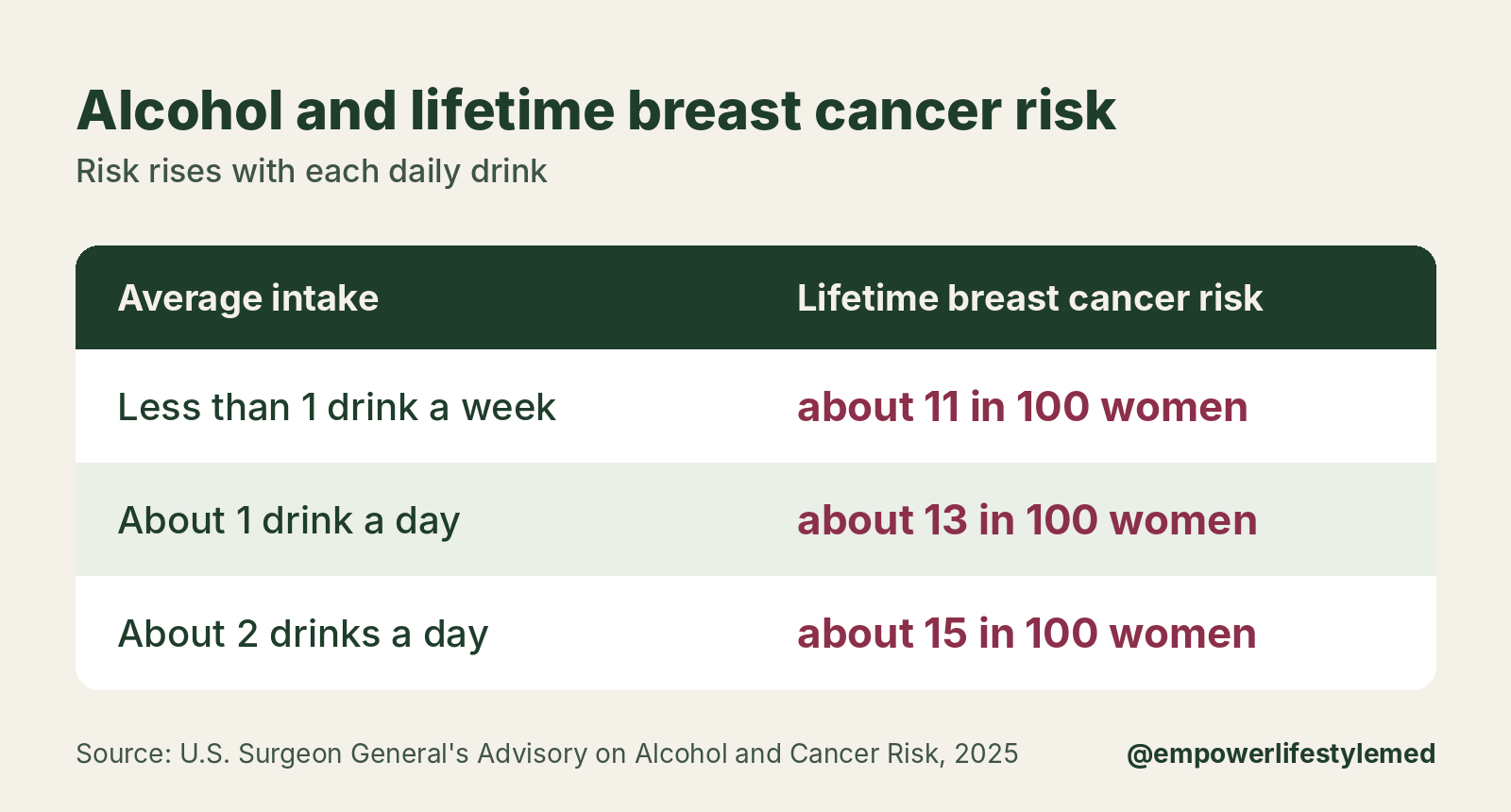
One way alcohol raises risk is by increasing estrogen levels, alongside DNA damage from its breakdown product, acetaldehyde. Only 45% of Americans know alcohol is a cancer risk factor.
Alcohol is a breast cancer risk you can control, and cutting back is one of the simplest ways to keep your overall risk low.
Bones, heart and belly fat
Bones: Drinking 3 or more units a day is a risk factor in the FRAX fracture-risk calculator we use alongside your DEXA scan to assess your risk for fracture due to osteopenia or osteoporosis.
Heart and blood pressure: Regular drinking raises blood pressure and can trigger irregular heart rhythms such as atrial fibrillation, at the same time menopause is already raising cardiovascular risk.
Belly fat and blood sugar: Alcohol is calorie-dense, lowers inhibitions around food and disrupts the sleep that regulates hunger hormones. All of that works against the visceral fat changes we covered in our belly fat series.
Midlife women are drinking more
This isn't a niche issue. Among U.S. women surveyed at age 35, those in the 2018–19 group had 73% higher odds of recent binge drinking and 51% higher odds of alcohol use disorder symptoms than women surveyed in 1993–97.
A University of Michigan analysis found binge drinking in midlife is common: 20–30% of adults aged 35–60 reported it, and alcohol use among midlife women has been rising while men's has not. For women, binge drinking means 4 or more drinks in one sitting.
Often it's not a dramatic pattern. It's the glass or two every night that became the way to switch off after work, kids and caring for aging parents.
What the new Dietary Guidelines changed
In January 2026, the 2025–2030 Dietary Guidelines for Americans replaced the long-standing limit of 1 drink a day for women and 2 for men. The new advice is simply to "consume less alcohol for better health." The guidelines still say not to drink if you're pregnant, or if you have a condition or take a medication that interacts with alcohol.
Some medical groups have raised concerns. The American Association for the Study of Liver Diseases noted that the new version sets no daily limits and doesn't account for differences in how men and women metabolize alcohol.
Our take: "Less is better" is accurate, but it's hard to act on without a number. For most women in midlife, we suggest:
Aim for no more than a few drinks a week, not one every day.
Keep several alcohol-free days each week.
Avoid alcohol within 3 hours of bedtime if sleep or night sweats are a problem.
Skip it entirely if you have a personal history of breast cancer, liver disease, a history of alcohol use disorder, or take medications that interact.
The right amount for you depends on your health history, so it's a good conversation to have at your next visit.
Your practical toolkit
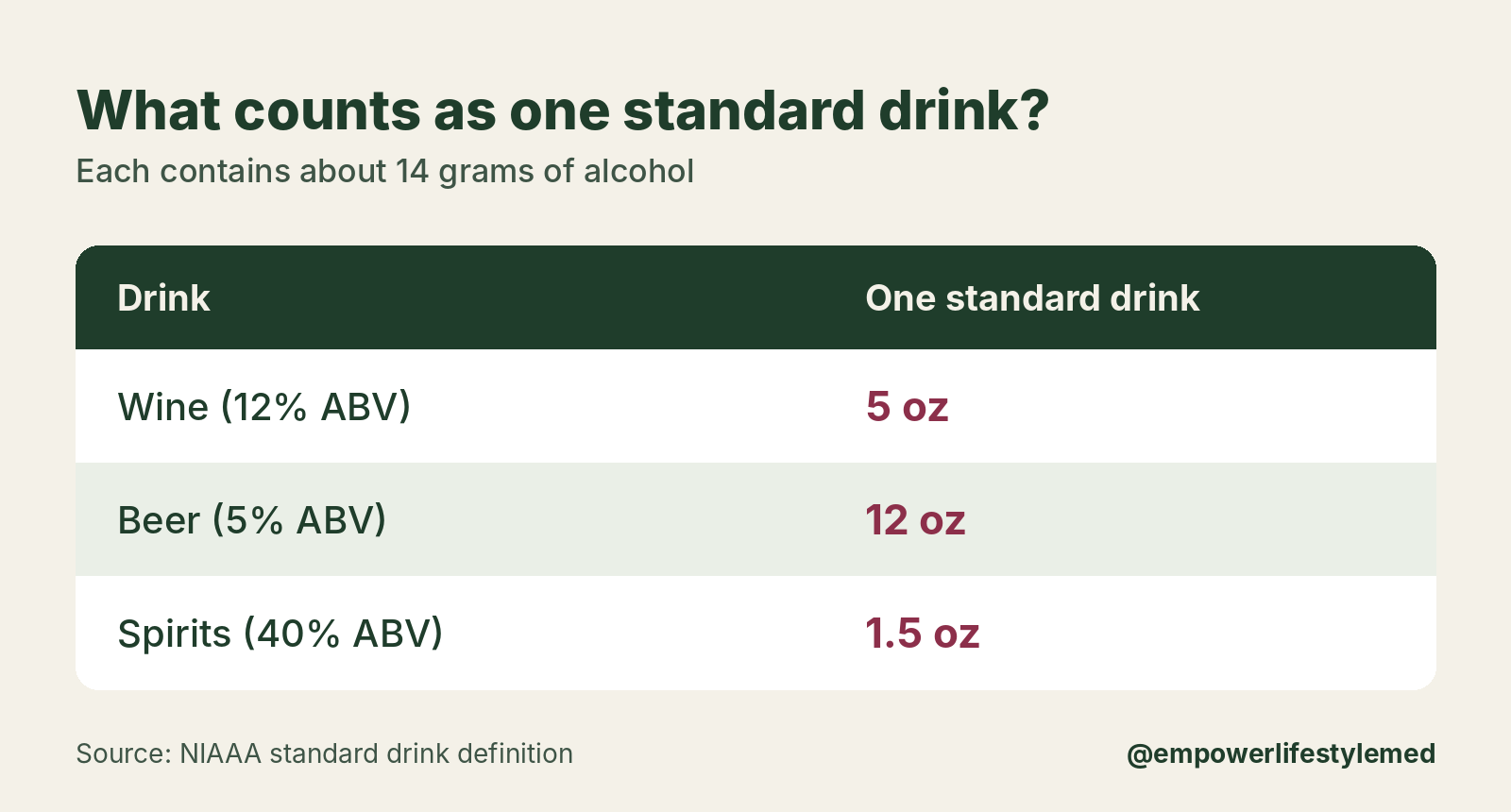
1. Know what a standard drink is
One U.S. standard drink has 14 grams of alcohol. Restaurant pours and home wine glasses are often 1.5–2 drinks.
2. Try a 14-day experiment
Go alcohol-free, or cut back by at least half, for two weeks. Each morning, rate:
Sleep quality (1–10) and how many times you woke
Hot flashes and night sweats (number and severity)
Mood and anxiety
Energy and cravings the next day
Compare your first and second week. Your own data is more convincing than any study.
3. Swap the ritual, not just the drink
Often it's the ritual you want: the pause, the nice glass, the signal that the day is done. Keep that part.
Sparkling water with citrus, muddled berries or fresh herbs in a wine glass
Tart cherry juice and seltzer (a source of natural melatonin)
Non-alcoholic wines, beers or botanical spirits
A 10-minute walk, stretch or bath as the new "end of day" cue
4. Ask yourself why you're pouring it
Is it enjoyment and celebration? Or has it become your treatment for insomnia, stress, anxiety or hot flashes? If it's the second, those symptoms deserve real treatment.
5. Know when to talk to your doctor
Talk to us if you:
Drink most days, or find it hard to stop at one or two
Use alcohol to manage sleep, anxiety or hot flashes
Have night sweats or insomnia that don't improve when you cut back
Are on MHT, a GLP-1 medication, antidepressants or sleep medication and have questions about alcohol
There are effective options for those symptoms, including hormone therapy, non-hormonal medications for hot flashes, and CBT for insomnia. Some medications can also reduce alcohol cravings.
The bottom line
If alcohol feels different in midlife, it's because it is. Your body is processing it differently, and it can worsen the hot flashes, broken sleep and mood changes you may already be dealing with. Over the long term, it adds to breast cancer, bone, heart and metabolic risk.
This isn't about perfection or giving up celebrations. It's about knowing the tradeoffs and choosing on purpose.
Ready for a plan that fits your life? Our physicians are board-certified in Lifestyle Medicine and Menopause Society Certified Practitioners. Schedule a free discovery call to talk about your symptoms, your risks and what will actually help.
This article is for educational purposes and is not a substitute for individual medical advice.
References
Office of the U.S. Surgeon General. Alcohol and Cancer Risk: The U.S. Surgeon General's Advisory. U.S. Department of Health and Human Services; January 2025.
Gardiner C, Weakley J, Burke LM, et al. The effect of alcohol on subsequent sleep in healthy adults: a systematic review and meta-analysis. Sleep Med Rev. 2025;80:102030. doi:10.1016/j.smrv.2024.102030
Davies E, et al. Women's alcohol use in mid-life: associations between menopause symptoms, drinking behaviour and mental health. Women's Health (Lond). 2025;21. doi:10.1177/17455057251359767
Cohort effects of women's mid-life binge drinking and alcohol use disorder symptoms in the United States. Addiction. 2023;118(10):1932–1941. doi:10.1111/add.16262
Patrick ME, et al. Links between adolescent binge drinking and midlife alcohol use behaviors. Alcohol Clin Exp Res. 2024. doi:10.1111/acer.15435
U.S. Department of Agriculture and U.S. Department of Health and Human Services. Dietary Guidelines for Americans, 2025–2030. January 2026. Summary: AARP.
American Association for the Study of Liver Diseases. AASLD raises concern over removal of evidence-based alcohol guidance in 2025–2030 Dietary Guidelines. 2026.
Older women are consuming more alcohol. Contemporary OB/GYN.
Drinkaware. Alcohol and menopause. Reviewed October 2025.