

What's Your Number? Why Estradiol Blood Levels Matter More Than Dose
Feeling good on your current dose doesn't guarantee your bones and heart are protected. Research shows up to a 10-fold difference in blood estradiol levels between women using the exact same patch or gel dose — meaning the number on your prescription may not reflect what's actually circulating in your bloodstream. Here's the serum estradiol level to ask your provider about, and why it matters more than the dose itself.

Osteoporosis: What It Is, Who's at Risk, and How to Protect Your Bones
Roughly 1 in 2 women over 50 will break a bone due to osteoporosis—yet most don't know their risk until it's too late. Here's everything you need to know: risk factors, prevention through lifestyle and supplements, how DEXA and FRAX scores work together, and an honest look at the risks and benefits of every treatment option.

Menopause Hormones 101 — Part Three Testosterone: the forgotten hormone
Most people think of testosterone as a "male hormone"—but it's essential for women too, with receptors in the brain, heart, muscles, bones, and more. In Part Three of our Menopause Hormones 101 series, we unpack what testosterone actually does, why it declines with age, and what the research really shows about testosterone therapy for low desire after menopause.

Menopause Hormones 101 — Part Two Progesterone: the other half of the hormone story
Progesterone is often the first hormone to decline during perimenopause, long before estrogen levels fully drop. This early hormonal shift can contribute to common symptoms such as sleep disturbances, mood changes, irregular periods, and heavier bleeding. Beyond its well-known role in protecting the uterine lining during hormone therapy, progesterone also influences sleep, brain function, bone health, and overall hormonal balance. In this comprehensive guide, we’ll explore the differences between bioidentical progesterone and synthetic progestins, their benefits and risks, how they affect breast cancer and cardiovascular health, and what every woman should know when considering hormone therapy during perimenopause and menopause.

Menopause Hormones 101 — Part One Estrogen: the multitasker behind menopause
For decades, estrogen has been one of the most misunderstood hormones in women’s health. Many women know it has something to do with hot flashes, periods, and menopause—but few realize just how far its influence extends throughout the body.
Estrogen isn’t just a reproductive hormone. It plays a critical role in maintaining healthy bones, blood vessels, muscles, skin, metabolism, brain function, and even the way your body regulates blood sugar. In fact, estrogen receptors are found in nearly every organ system, which is why the transition through perimenopause and menopause can affect so much more than your menstrual cycle.
Unfortunately, confusion surrounding hormone therapy—much of it stemming from early interpretations of the Women’s Health Initiative (WHI) study—has left many women unnecessarily suffering through symptoms or avoiding treatments that could improve both their quality of life and long-term health.
Understanding what estrogen is, how it changes during menopause, and what the latest science tells us about hormone therapy is one of the most important steps women can take to make informed decisions about their health. In this guide, we’ll explore the different types of estrogen, what happens when levels decline, the potential benefits and risks of menopausal hormone therapy, and how to determine whether estrogen treatment may be right for you.

Menopause and the Gut Microbiome: The Overlooked Connection That Shapes Your Health
Menopause is often framed around hot flashes and hormone shifts—but an equally important transformation is happening in the gut. As estrogen declines, the gut microbiome begins to change in ways that influence metabolism, inflammation, mood, and long-term health. This dynamic ecosystem of bacteria doesn’t just support digestion—it actively participates in hormone regulation, immune balance, and even brain function.
During the menopausal transition, shifts in the microbiome—particularly within the estrobolome, the bacteria responsible for metabolizing estrogen—can create a ripple effect throughout the body. Reduced microbial diversity and altered bacterial balance may contribute to weight gain, increased inflammation, digestive issues, and changes in mood and cognition. In other words, many of the symptoms women experience in midlife are not isolated—they are interconnected through the gut–brain–hormone axis.
The empowering takeaway is that the gut microbiome is highly responsive to lifestyle. Nutrition, sleep, stress, and targeted interventions can meaningfully reshape this internal environment. By supporting gut health, women can take a more root-cause, whole-body approach to navigating menopause—improving not just symptoms, but overall health trajectory and quality of life.

The Libido Shift: Why Desire Changes—and What Helps
Low libido during perimenopause is common—but that doesn’t make it insignificant. For many women, it’s not just about sex; it’s about identity, connection, and feeling at home in their own body. The loss of desire can feel subtle at first, then suddenly profound, leaving women wondering what changed and whether it can come back.
The answer is yes—but not through a one-size-fits-all solution. Desire is shaped by a complex interplay of hormones, brain chemistry, physical health, emotional wellbeing, and relationship dynamics. That’s why meaningful treatment goes beyond quick fixes. It involves understanding the “why” behind the change and addressing it from multiple angles.
Whether it’s optimizing hormones, adjusting medications, treating vaginal or pelvic discomfort, or reconnecting with intimacy on a psychological and relational level, there are evidence-based ways to improve sexual wellbeing. And while treatments like testosterone or other medications can help, the most impactful approach is often personalized, layered, and rooted in the whole picture of a woman’s health.
If your libido has changed and it matters to you, it’s worth paying attention to. Because desire isn’t just a luxury—it’s a meaningful part of quality of life, and one that deserves care, validation, and thoughtful treatment.

Nutrition, Sleep, and Medical Therapies for Menopausal Belly Fat (Belly Fat series, #4)
Addressing belly fat during menopause requires more than just exercise—it demands a comprehensive approach that works with the body’s changing physiology. As estrogen declines, shifts in metabolism, appetite regulation, and fat storage make it easier to gain visceral fat and harder to lose it. This is why nutrition, sleep, and, in some cases, targeted medical therapies become essential pieces of the puzzle.
A growing body of research supports a plant-predominant, high-polyphenol dietary pattern as a powerful strategy for improving metabolic health and reducing visceral fat. These compounds—found in foods like berries, leafy greens, nuts, seeds, spices, cocoa, and tea—help improve insulin sensitivity, reduce inflammation, and influence how and where fat is stored. When combined with adequate protein to preserve muscle and sufficient fiber to support satiety and gut health, nutrition becomes a key driver of body composition change.
Equally important, though often overlooked, is sleep. Hormonal changes in menopause frequently disrupt sleep quality, which in turn alters hunger hormones, increases cravings, raises cortisol levels, and promotes abdominal fat storage. Prioritizing sleep—and addressing insomnia through evidence-based strategies like cognitive behavioral therapy—can have a meaningful impact on both weight and metabolic health.
For some women, additional tools may be appropriate. Hormone therapy can help address the root hormonal shifts contributing to fat redistribution and metabolic changes, while newer medications such as GLP-1 receptor agonists offer support for appetite regulation and weight loss. Even targeted supplements like creatine can play a role in preserving muscle when paired with resistance training.
Ultimately, menopausal belly fat is not the result of a single cause, and it cannot be solved with a single intervention. The most effective strategy is one that integrates nutrition, sleep, exercise, and individualized medical support—shifting the focus from short-term weight loss to long-term metabolic health.

The Science of Exercise for Menopausal Belly Fat (Belly Fat series, #3)
Many women respond to midlife body changes by doing more cardio—but during menopause, that strategy alone often isn’t enough. The physiology has shifted. Muscle loss accelerates, fat—particularly visceral fat—increases, and metabolism becomes less forgiving. To see meaningful results, exercise needs to evolve alongside these changes.
The goal is no longer just burning calories—it’s rebuilding and preserving muscle while reducing harmful fat. Strength training becomes essential, helping to maintain metabolically active tissue and support a healthier resting metabolism. At the same time, cardiovascular exercise plays a critical role in improving heart health, increasing calorie expenditure, and enhancing insulin sensitivity.
Adding high-intensity interval training (HIIT) can further amplify results, particularly when it comes to reducing abdominal and visceral fat. Short bursts of intense effort followed by recovery periods have been shown to deliver powerful metabolic benefits in less time.
The most effective approach is a combination of all three: strength training to protect muscle, cardio to support overall health, and HIIT to specifically target visceral fat. When used together, these strategies work with your body’s changing physiology—helping you achieve results that feel aligned, sustainable, and effective.
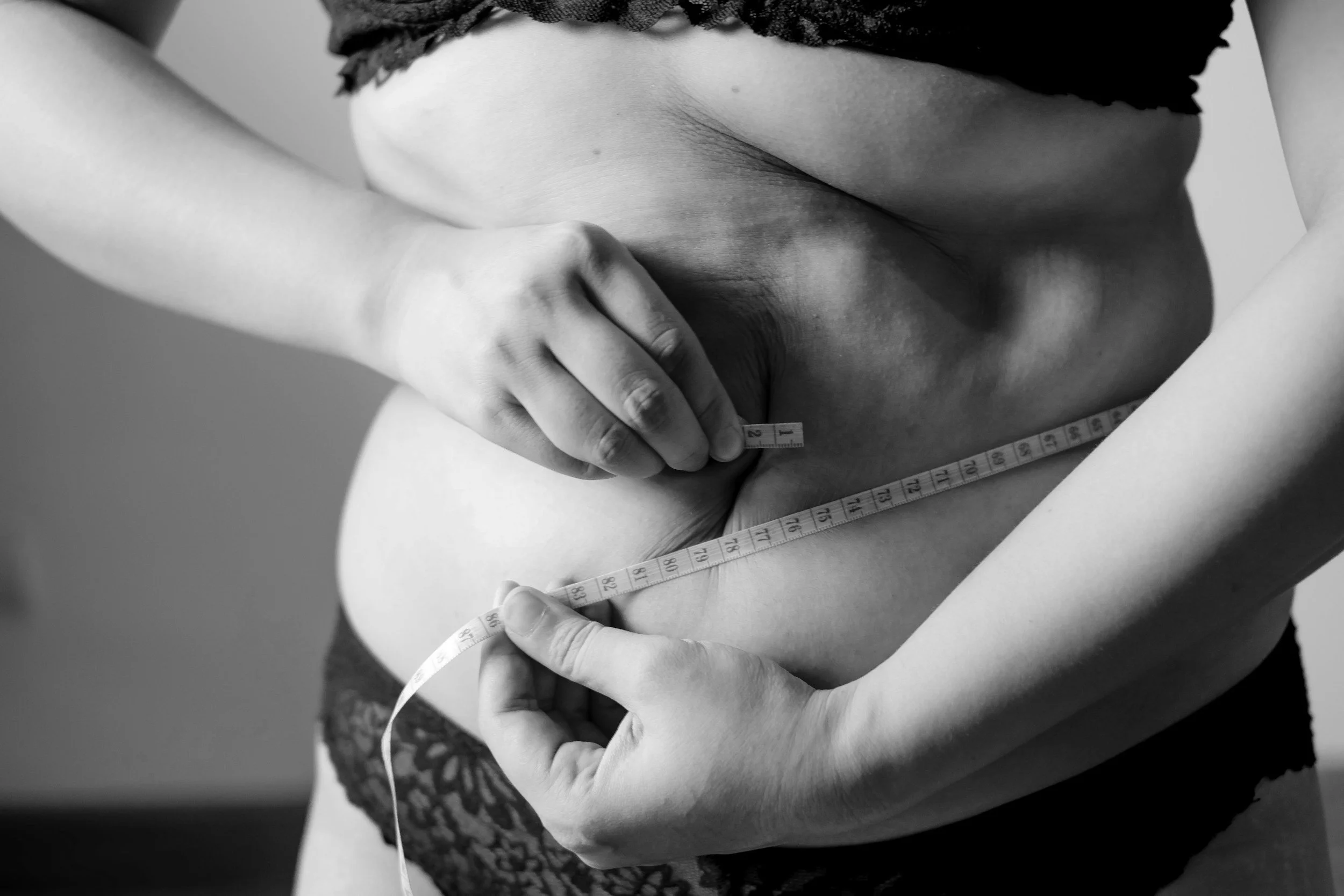
Measuring Belly Fat in Menopause—What Actually Matters (Belly Fat series, #2)
Many women enter midlife feeling like their bodies are no longer responding the way they used to. You may be eating the same, exercising the same, and yet noticing changes that don’t quite make sense—especially when the number on the scale hasn’t dramatically shifted. This disconnect can feel frustrating, but it reflects a deeper physiological shift happening beneath the surface.
During menopause, the conversation is no longer just about weight—it’s about body composition. Fat mass tends to increase, particularly around the abdomen, while lean muscle mass gradually declines. Because the scale cannot distinguish between these two, it often fails to capture the true nature of these changes. This is why relying on weight alone can lead to confusion and missed opportunities for early intervention.
A more meaningful approach focuses on three key metrics: weight for overall trends, waist circumference as a window into abdominal and visceral fat, and body composition through DEXA scanning for precise measurement of fat and muscle distribution. Among these, waist circumference stands out as a powerful and accessible tool. Even small increases can signal rising metabolic risk, often before changes appear on the scale.
When we begin to measure what actually matters, the goal shifts. It’s no longer about chasing a lower number—it’s about preserving muscle, reducing harmful visceral fat, and improving metabolic health. This shift not only provides clarity, but also opens the door to more effective, personalized strategies that truly support long-term health.