
Many women enter midlife feeling like their bodies have changed almost overnight—particularly around the abdomen. Clothes fit differently, weight redistributes, and efforts that used to work no longer seem effective. This experience is incredibly common, and importantly, it is grounded in biology—not a lack of discipline.
Research has consistently shown that during the menopausal transition, particularly in the years surrounding the final menstrual period, there are measurable and significant changes in body composition. Women tend to gain fat mass, lose lean muscle, and experience a disproportionate increase in visceral fat—the type of fat stored deep within the abdomen around internal organs. These changes occur even when overall weight does not dramatically increase, which is why many women notice changes in shape more than changes on the scale.
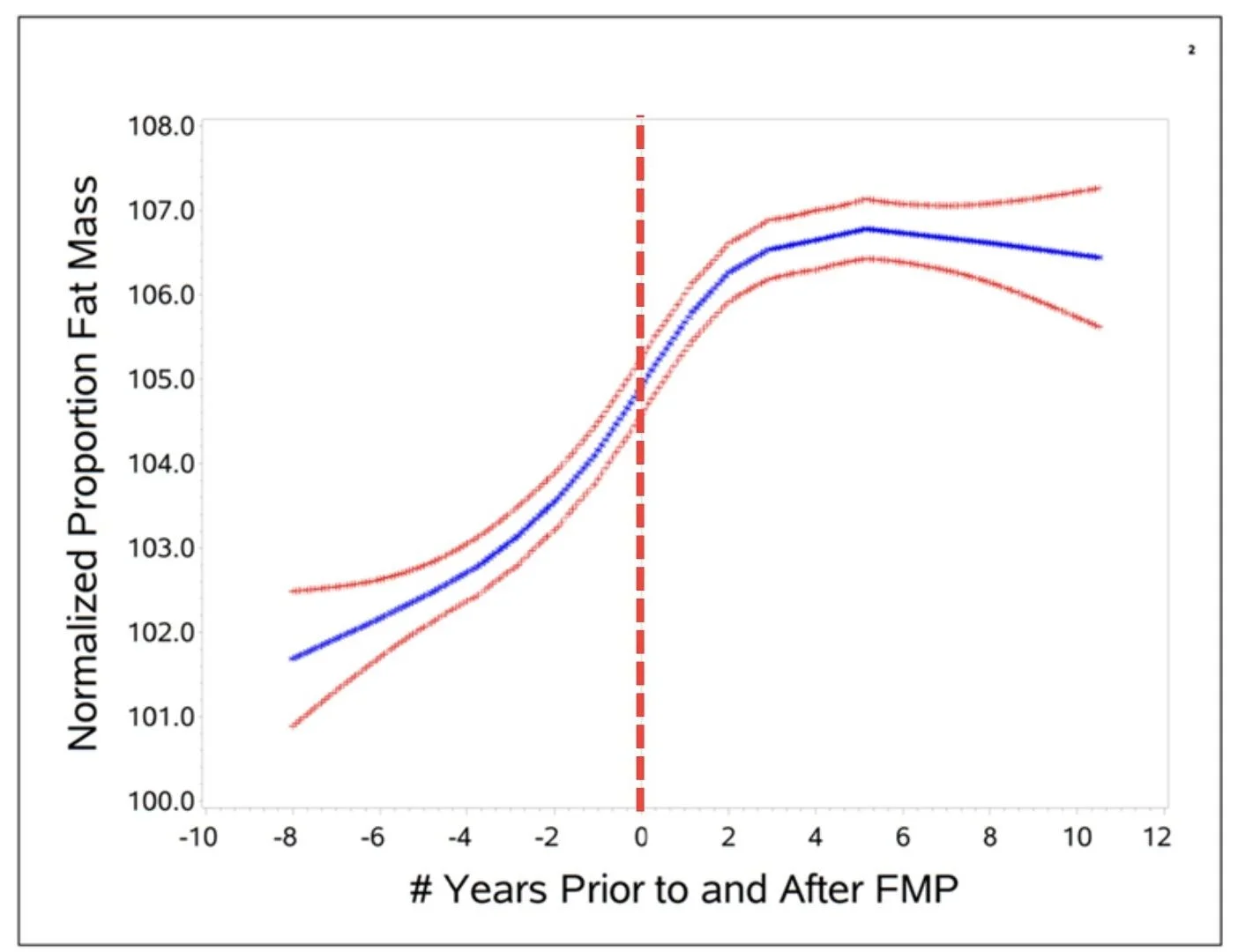
Fat mass increases dramatically during the years surrounding the final menstrual period (FMP). From Greendale GA, Sternfeld B, Huang M, et al. Changes in body composition and weight during the menopause transition. JCI Insight. 2019;4(5):e124865.
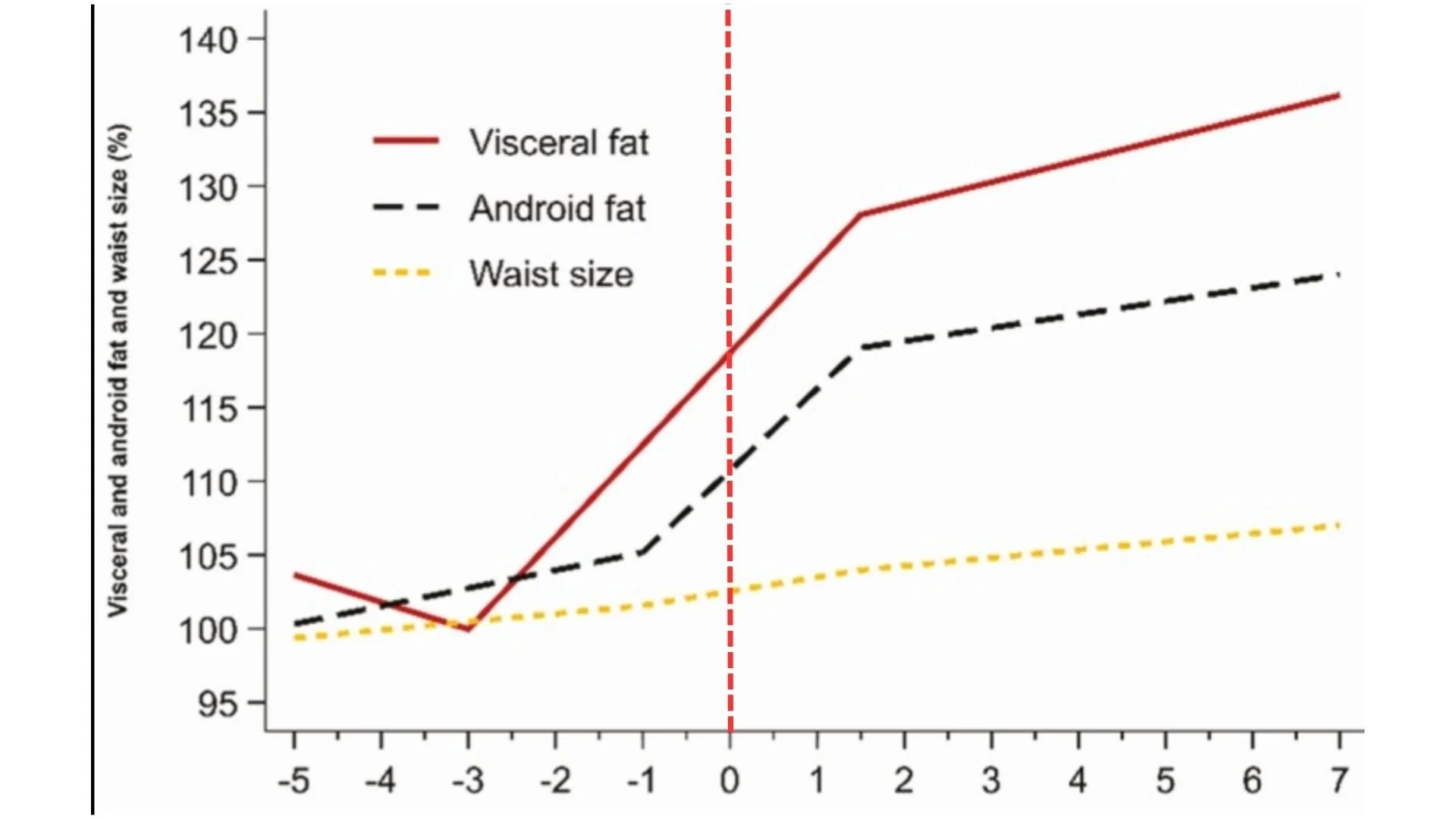
Visceral fat and android fat increase dramatically during the years surrounding the final menstrual period. Waist size increases steadily during this same time and is unrelated to the timing of the final menstrual period. From: Greendale GA, Han W, Finkelstein JS, et al. Changes in Regional Fat Distribution and Anthropometric Measures Across the Menopause Transition. J Clin Endocrinol Metab. 2021;106(9):2520-2534.
At the center of these changes is estrogen. While often thought of primarily as a reproductive hormone, estrogen plays a critical role in regulating metabolism, fat distribution, and muscle maintenance. As estrogen levels decline, the body undergoes a shift in how it stores energy. Fat that was previously stored in the hips and thighs begins to accumulate in the abdominal region, creating a more “central” fat distribution pattern.
This shift is compounded by several physiologic changes:
• Reduced muscle protein synthesis, leading to gradual muscle loss
• Decreased resting metabolic rate
• Altered fat metabolism, with less efficient fat breakdown
The result is a metabolic environment that favors fat accumulation—particularly in the abdomen—even without major changes in diet or activity.
It’s also important to understand that visceral fat is not simply an aesthetic concern. Unlike subcutaneous fat, which sits just under the skin, visceral fat is metabolically active. It produces inflammatory signals and hormones that contribute to insulin resistance, cardiovascular disease, and broader metabolic dysfunction.
While aging does contribute to gradual metabolic changes, menopause accelerates and amplifies these effects. Aging tends to cause slow, steady muscle loss, whereas menopause introduces a more abrupt hormonal shift that specifically promotes central fat gain.
Understanding this distinction is essential. It reframes the conversation from “why is this happening to me?” to “what is my body doing differently—and how can I respond effectively?”
In the next post, we’ll move from understanding to measurement, focusing on how to accurately track these changes so you can make informed, targeted decisions.
References:
Greendale GA, Sternfeld B, Huang M, et al. Changes in body composition and weight during the menopause transition. JCI Insight. 2019;4(5):e124865.
Greendale GA, Han W, Finkelstein JS, et al. Changes in Regional Fat Distribution and Anthropometric Measures Across the Menopause Transition. J Clin Endocrinol Metab. 2021;106(9):2520-2534.
Hurtado MD, Saadedine M, Kapoor E, Shufelt CL, Faubion SS. Weight Gain in Midlife Women. Curr Obes Rep. 2024 Jun;13(2):352-363.
