
The Science of Exercise for Menopausal Belly Fat (Belly Fat series, #3)

Exercise remains one of the most effective tools for improving body composition, but during menopause, the strategy matters just as much as the effort.
Many women increase cardio when trying to lose weight, but this approach alone often falls short in midlife. The reason lies in the underlying physiology: menopause accelerates muscle loss while promoting fat gain. Without addressing both sides of that equation, results are limited.
An effective exercise strategy during menopause is not focused solely on burning calories—it is focused on rebuilding and preserving metabolically active tissue while reducing visceral fat. This requires incorporating both strength training AND cardio into your exercise regimen.
Strength Training:
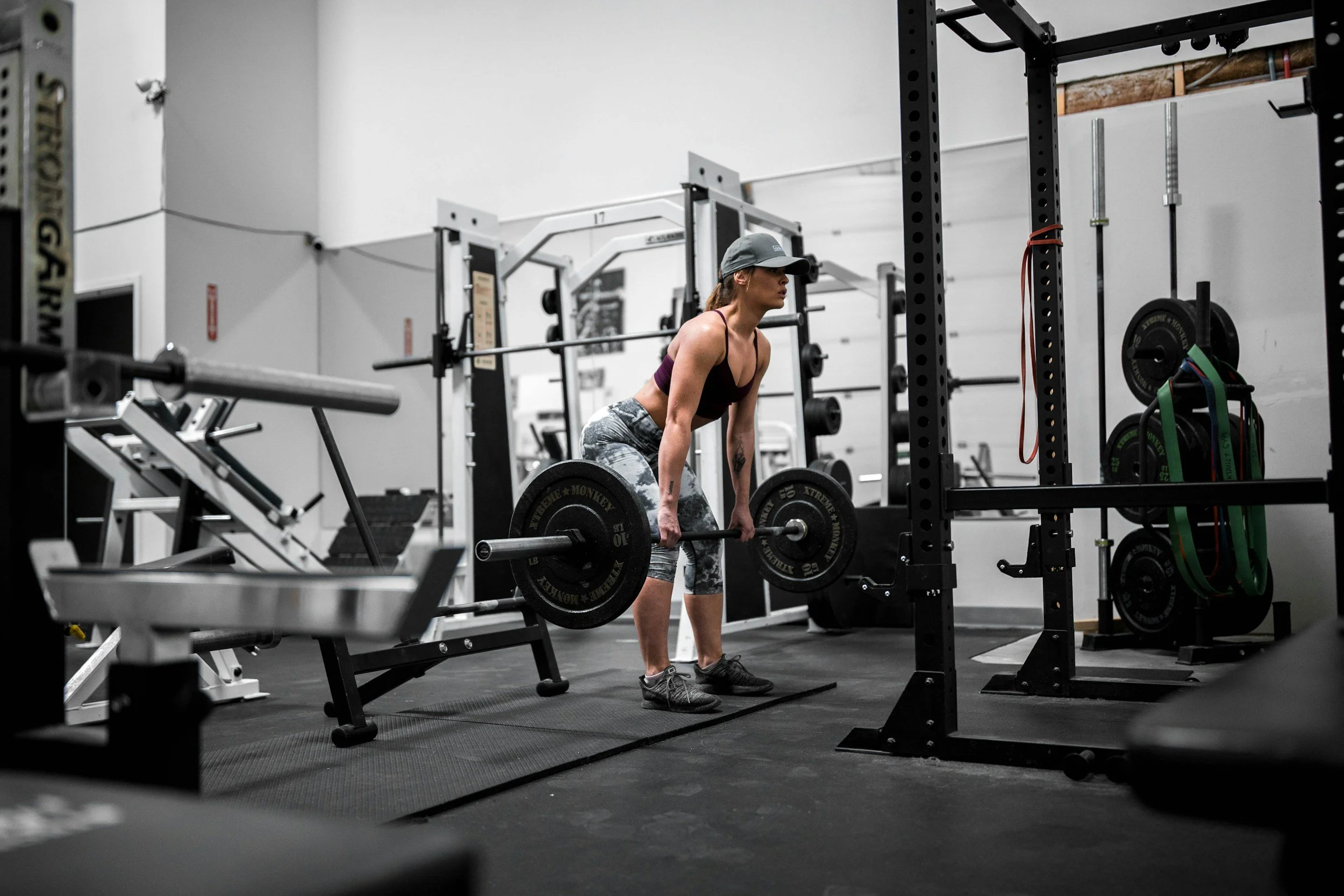
Strength training plays a central role in this process. Muscle tissue is metabolically active, meaning it increases resting energy expenditure. As muscle mass declines during menopause, metabolism slows, making fat gain more likely. Strength training directly counteracts this by stimulating muscle protein synthesis and preserving lean mass.
To be effective, strength training must be progressive. This means gradually increasing resistance (weight) or repetitions over time to continue challenging the muscles and promoting adaptation.
Key principles of strength training include:
Training 2–4 times per week
Targeting all major muscle groups twice a week
Ensuring the final repetitions of each set are challenging

Cardiovascular Exercise:
Even though strength training is essential, that does not mean that cardio is less so. Cardio increases calorie expenditure, reduces overall fat mass, and improves cardiovascular health and enhances insulin sensitivity.
The minimum recommended amount of cardiovascular exercise weekly is:
150 minutes per week of moderate intensity exercise
Think brisk walking, cycling, or swimming
Intensity level where conversation is possible but singing is not
OR
· 75 minutes per week of vigorous intensity exercise
· Think running, fast cycling
· Intensity level where conversation is not possible

High Intensity Interval Training:
High-intensity interval training (HIIT) adds another important layer. HIIT involves short bursts of intense (90-100%) effort followed by short recovery periods and has been shown to be particularly effective in reducing visceral fat.
In a randomized trial of postmenopausal women, HIIT—especially when combined with resistance training—led to greater reductions in both abdominal fat and visceral fat compared to moderate intensity cardio, over a 3 month period.
The benefits of HIIT extend beyond calorie burn. It enhances mitochondrial function, increases post-exercise energy expenditure, and improves insulin sensitivity.
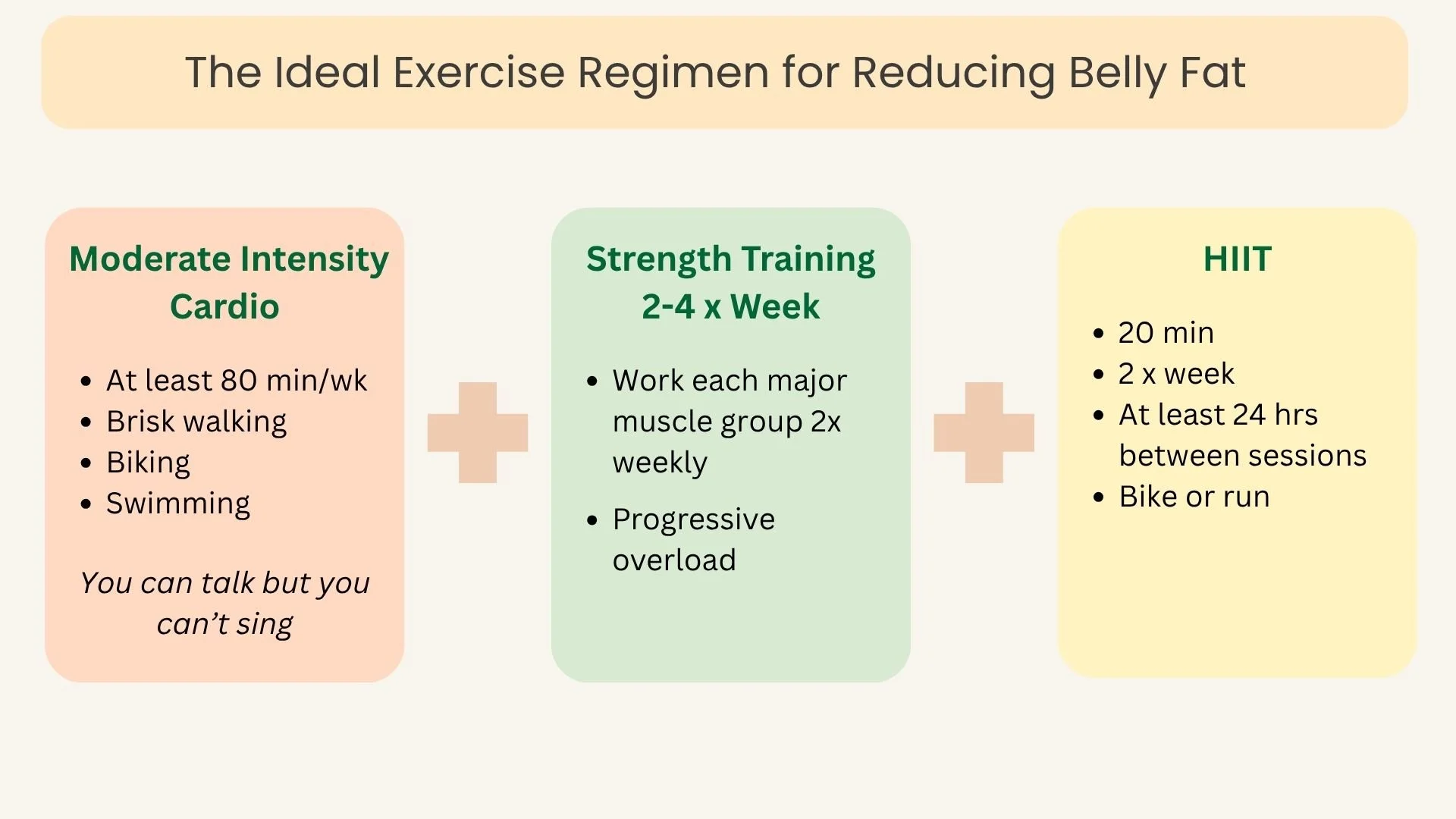
The most effective exercise program combines all three modalities:
Strength training to preserve and build muscle – work each major muscle group at least twice weekly and focus on progressive overload
Moderate cardio to support metabolic health – at least 80 minutes a week
HIIT to target visceral fat – 20 minute sessions twice a week with at least 24 hours between sessions for recovery
This integrated approach works with the physiologic changes of menopause rather than against them.
In the final post, we’ll expand beyond exercise to discuss nutrition, sleep, and medical therapies—key factors that often determine long-term success.
References:
Dupuit M, Rance M, Morel C, Bouillon P, Pereira B, Bonnet A, Maillard F, Duclos M, Boisseau N. Moderate-Intensity Continuous Training or High-Intensity Interval Training with or without Resistance Training for Altering Body Composition in Postmenopausal Women. Med Sci Sports Exerc. 2020 Mar;52(3):736-745.
